
The latest small business budget buster

The latest small business budget buster
July 23, 2026
Good morning,
Max Woolf here,
Being a small business owner in Massachusetts can often feel like death by a thousand cuts.
One month, it's higher energy costs. The next is rising credit card swipe fees, payroll, rent or property taxes. Now, another painful blow to what is already one of the largest expenses for many employers: health insurance.
This week, state regulators approved a health insurance rate increase of 10.4% (on average) for individuals and small businesses buying coverage in the merged market, reports Commonwealth Beacon’s Chris Lisinski.
While regulators succeeded in negotiating down the increases, the average family health plan will still top $50,000 a year. That's simply unsustainable for many of our small businesses already struggling with rising costs.
Retailers Association of Massachusetts President Jon Hurst called the approved rates "very disappointing," adding that it’s “unaffordable. It's anti-competitive, and it's shocking that Beacon Hill just doesn't seem to get it."
These increases add to the mountain of obstacles small independent businesses already face.
At some point, something has to give.
Some better business news
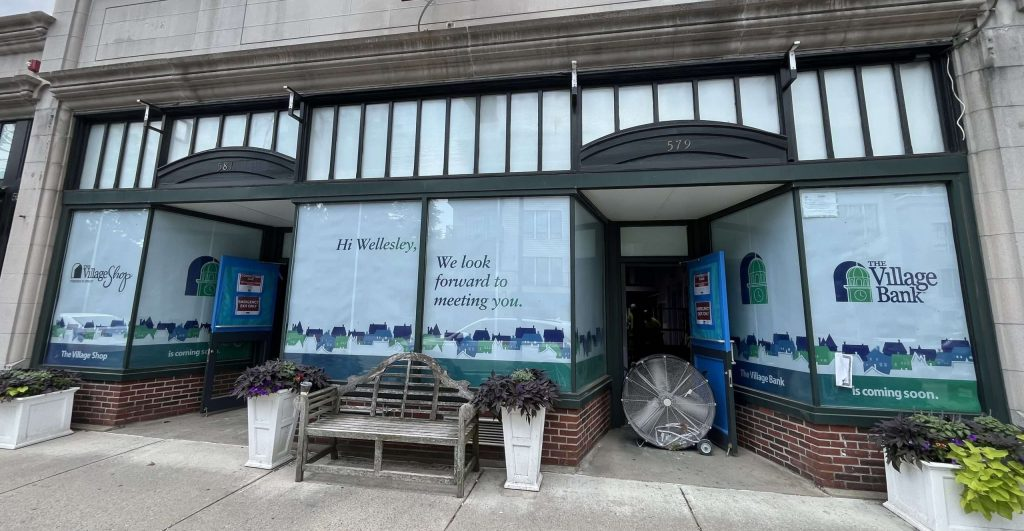
Earlier this year, we highlighted UpNext, the retail incubator founded by Allison Yee, and its partnership with Village Bank to create a rotating pop-up shop inside the bank's new Wellesley branch.
Now, even before the Wellesley location opens this fall, the concept is expanding. Village Bank is planning a second pop-up space at its first Needham branch, replacing the departing Masala Art restaurant on Great Plain Ave., reports Peter O'Neil of the Needham Observer.
The goal is for businesses to "start off with us... and then rent an open storefront that might be available within the community," says Yee.
At a time when opening a brick-and-mortar business comes with a thousand cuts, giving emerging retailers a low-cost place to launch fits right in with the bank’s long-admired commitment to its communities.
Plus, nonprofits in both Wellesley and Needham must be thrilled knowing Village Bank is expanding into their communities, given the bank’s renowned philanthropic generosity
Is Massachusetts not fun enough?

Well, the Massachusetts Senate seems to think so. But the House, maybe not so much.
As part of its economic development bill passed yesterday, the Senate looked to add a whole host of amendments under its so-called "fun agenda."
A few highlights might include:
- Permanently extending last call to 3 a.m., allowing communities to create public drinking zones, and allowing communities to opt in to happy hour.
- Capping the resale price of concert and live entertainment tickets at 110% of face value.
- Directing the state to seek more international soccer matches, with a specific effort to get the Scots to return to Massachusetts.
Asked whether Massachusetts has a "fun problem," House Speaker Ron Mariano quipped, "Fun problem? I've never had trouble finding it."
The House, as well as the governor, would still need to approve any of these changes.
New Newton planning director connects small business success to housing
Here at the Chamber, we often talk about how housing, small business success and economic growth are all connected.
Newton Mayor Marc Laredo's nominee for planning director made that same case during her introduction to a City Council that has often been divided over housing policy.
Catherine Feerick repeatedly returned to the idea that thriving village centers depend on having enough people to support local restaurants and retailers.
Pointing to the lasting effects of online shopping and changing post-pandemic consumer habits, Feerick said reviving commercial districts is about "cultivating activity."
"In order for any of these small businesses to be successful, they need customers," she said, arguing that more housing near village centers creates the "captive audience" local businesses need.
Feerick also suggested multifamily housing can strengthen the city's tax base.
"Every time I've run an impact analysis on multifamily residential, it more than pays for itself," she told councilors.
Feerick has two decades of experience in economic development, most recently as director of land use and economic development for the Town of Foxborough and, before that, as economic development director for the City of Attleboro.
Her appointment heads to the full council in August for confirmation.
Fig City News has more
Friday grab bag
- A federal judge has extended Temporary Protected Status (TPS) for Haitian nationals until at least Monday (July 27). Read our statement on why TPS needs a long-term extension and why Haitian Americans are a vital part of our regional workforce, particularly in health care, hospitality and construction
- If you overstay a parking meter in Brookline, it'll now cost you more. Parking tickets increased from $25 to $45 last weekend after the Select Board approved the hike in May. We urged the board to revisit the issue, warning that steeper fines might discourage customers from visiting local businesses, but our request was declined. (Brookline.News)
- The 2026 Massachusetts statewide ballot is set, with nine questions heading to voters this November. After a brief period of uncertainty, one of them will ask voters whether to repeal the 2016 law legalizing recreational marijuana. The Charles River Regional Chamber opposes the repeal and urges you to vote NO.
- Watertown has attracted three more life sciences companies to Cambridge Scientific Labs…yes, despite the name, it's actually on Dexter Ave. in East Watertown. Resonance Life Sciences, DPBIO and E&M Biolab have all recently moved into the campus. Watertown BIO
- A new Banker & Tradesman article explores how Brookline's growing YIMBY movement is reshaping local housing politics. The story examines the group's recent electoral successes and how town officials are now studying more aggressive strategies to encourage housing production.
- Our 10th Middlesex State Representative debate between Rep. John Lawn and Newton City Councilor Alison Leary was a doozy. If you missed the jabs, sharp exchanges and policy clashes, the Waltham Times and Newton Beacon both published recaps. Or skip the summaries and watch the full debate yourself.
- The Watertown City Council (sitting as the Redevelopment Authority) will discuss the draft demonstration plan for Watertown Square on Aug. 10, at 6 p.m. The hybrid meeting at the Watertown Free Public Library will mark the first time city councilors lend their formal opinion on the plan and will include an opportunity for public comment. Read the full announcement.
- Get Konnected is hosting its 12th annual A Taste of Ethnic Boston, where restaurant entrepreneurs, chefs, and culinary professionals are platformed to showcase their talent and stories. Use the code GKPARTNER for $20 off each ticket!
- Our second annual Watertown Night is happening Aug. 27, 5:30-7 p.m. at the Mighty Squirrel Biergarten at Gore Place. More details will follow.
- Rent control may have been knocked off the 2026 ballot on a legal technicality, but Pioneer Institute's Andrew Mikula argues that all signs point to its return in 2028. His message to the real estate industry: stop assuming the courts will save you and start advancing alternatives that address affordability before voters are asked to choose rent control again. Banker and Tradesman
A new way to unlock housing
While the state House and Senate roll up their sleeves to battle over major zoning reforms like legalizing duplexes statewide, a quieter housing change has already been signed into law through this year's state budget.
Until now, if you wanted to build housing in a district where weren't allowed, you generally had one option: change the zoning. And in our communities, that often means a lengthy and uncertain political process.
The new law creates another path.
Rather than changing the zoning first, builders can now ask their local zoning board for a use variance allowing multifamily housing on a property where residential uses aren't otherwise allowed. The law also lowers the standard for granting those variances and, for the first time, directs boards to weigh the public benefit of producing housing when making their decisions.
The reform also has local roots, too. Needham resident Dan Dain of Dain, Torpy, chaired the Real Estate Bar Association of Massachusetts committee that developed and advocated for many of the changes.
While communities, developers, neighbors and land use attorneys are still sorting out exactly what the changes mean, we could soon begin to see housing proposals in places where they previously had little chance of moving forward.
That could mean more apartments in commercial districts and, in some cases, even triple-deckers and townhomes in single-family neighborhoods.
Thank you for celebrating with us

More than 200 members and friends joined us last night at Commodore Builders in West Newton for the Chamber's Summer Celebration.
And it was a blast.
"We're in the construction industry, but we're really focused on building communities," Commodore Builders Founder and CEO Joe Albanese told the crowd. "That's why we're thrilled to be back in Newton."
A special thank you to Albanese and the entire Commodore Builders team for welcoming us into their incredible space and to our presenting sponsor, Dedham Savings, for helping make the evening possible.
That’s what you need to know for today, unless you want to know why an ice meteor could have hit Needham this week.

Public Policy and Government Affairs Manager
Charles River Regional Chamber
617-431-6101
I also value your feedback