
MassBay Development FAQ

MassBay Development FAQ
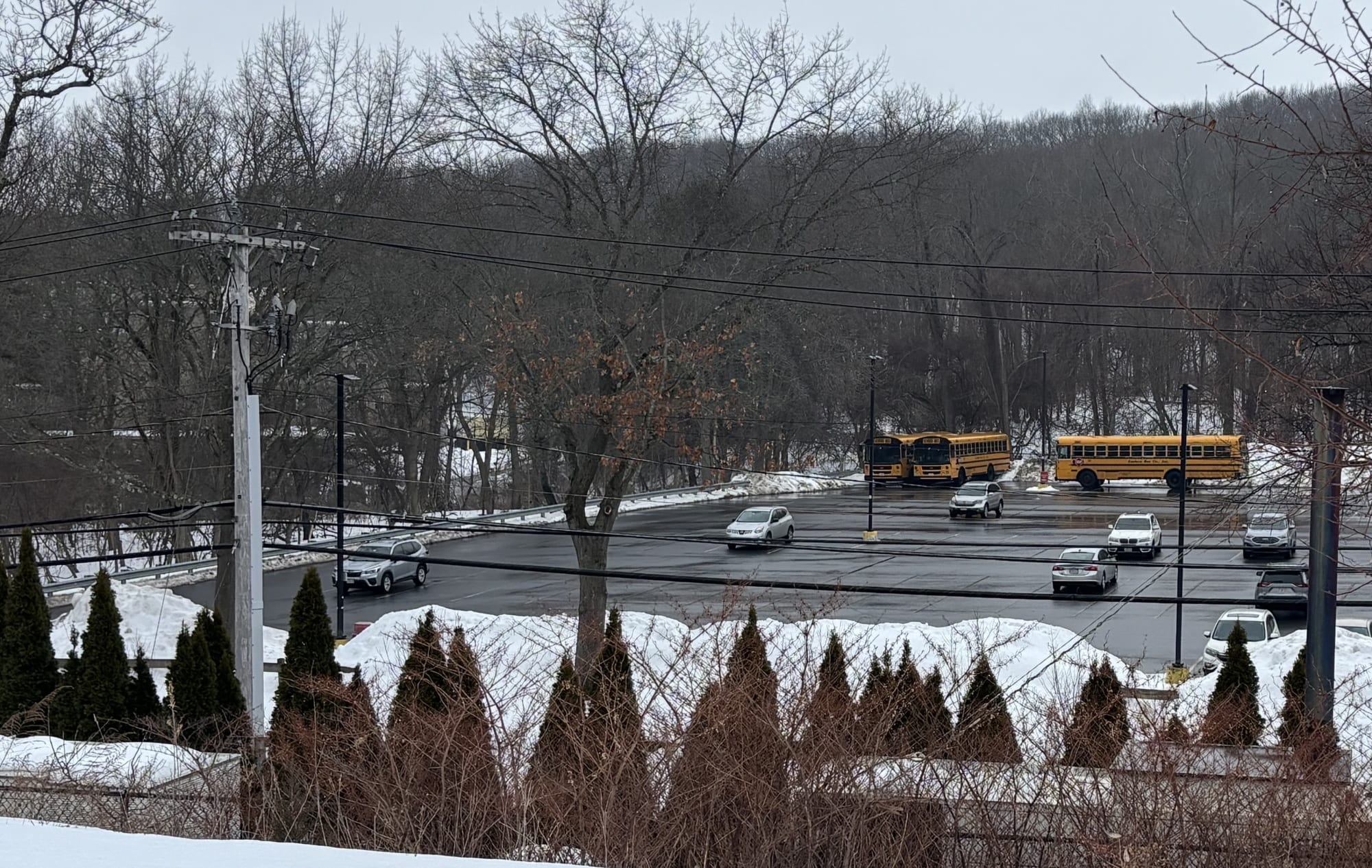
What is the state looking to do on the MassBay Community College campus in Wellesley?
As part of a multifaceted effort to address the state’s housing shortage, the Healey-Driscoll Administration is looking to redevelop a campus parking lot on Oakland Street to create 180 units of new housing while simultaneously using revenue from the sale of the land to fund needed upgrades to MassBay’s campus
Last fall, MassBay’s Board of Directors voted to declare the 5-acre parking lot and 40-acre forest surplus state land, officially initiating this process.
I’ve heard the process does not require Wellesley’s usual local permitting. Why is that?
Because it is state-owned land and governed by the State Land for Homes program, created through the 2024 Massachusetts Affordable Homes Act, the redevelopment bypasses most local permitting if used for housing.
However, the law still allows the town to reasonably regulate aspects of the project, such as its appearance, bulk, and setbacks, as long as it does not make the project infeasible. These steps will occur once a developer is selected.
I’m not against housing, but I’m dead set against destroying the forest to build housing. How can we stop this?
The forest will NOT be destroyed! Only the area by the parking lot is proposed for housing.
Select Board Chair Marjorie Frieman has also confirmed that Governor Healey’s Office of Housing has assured State Rep. Alice Peisch, Senator Cindy Creem and town officials that the state is committed to concentrating any development on the parking lot area on Oakland Street, not the forested area.
“Residents should take some comfort in knowing that they’re not looking to develop the forest, they’re looking at perhaps a little bit of land beyond the parking lot, ” Frieman announced late last year (Video at 2:26:47) and has repeated since.
State housing secretary Ed Augustus also confirmed this in a Boston Globe interview. He said there is no plan to build on the forestland, and that officials would be willing to place the wooded portion of the site under a long-term conservation restriction.
“To us, that’s a win-win-win proposition,” Augustus said. “We get the housing that we need as a state, and they, as a community, need. They get to protect this forested area, which … is not protected now. And the college gets the revenue that comes from the sale of the property that helps advance some of their goals and strategic plans.”
Is there a way the forest could be permanently protected in the future?
The forest behind Centennial Park is NOT permanently protected conservation land.
The surest way to protect the forest is through the state’s offer to establish a conservation easement. That would require the town to make it clear that forest conservation is a priority and to pursue this through partnership rather than opposition.
Local organization Building a Better Wellesley said it best when they wrote, “The best way to [preserve the forest] is not with lawsuits, delays, and obfuscation. Instead, we urge town residents and, especially, elected leaders to collaborate with the Commonwealth for a win-win-win for Wellesley, MassBay students, and the broader community.”
Litigation threats and non-engagement only serve to alienate the state from working cooperatively with the town to permanently protect the forest. Thus, entering into good-faith negotiations with the state to advance well-designed, responsible housing development on the parking lot offers Wellesley the best chance to preserve the forest.
Why did the MassBay Board of Directors agree to sell part of its land, and what does it plan to do with the proceeds?
They did so because some of MassBay’s current facilities on Oakland Street are insufficient for the needs of one of the state’s leading community colleges.
The sale will directly contribute to the college’s reinvestments in its campus. This includes plans for a new gym and wellness center (MassBay currently has one in subpar condition), a new cybersecurity education facility, and other improvements that support students and workforce development.
MassBay hopes to eventually open the new gym to the public during non-school hours as a community resource.
How much housing does the Affordable Homes Act allow on land that is to be sold?
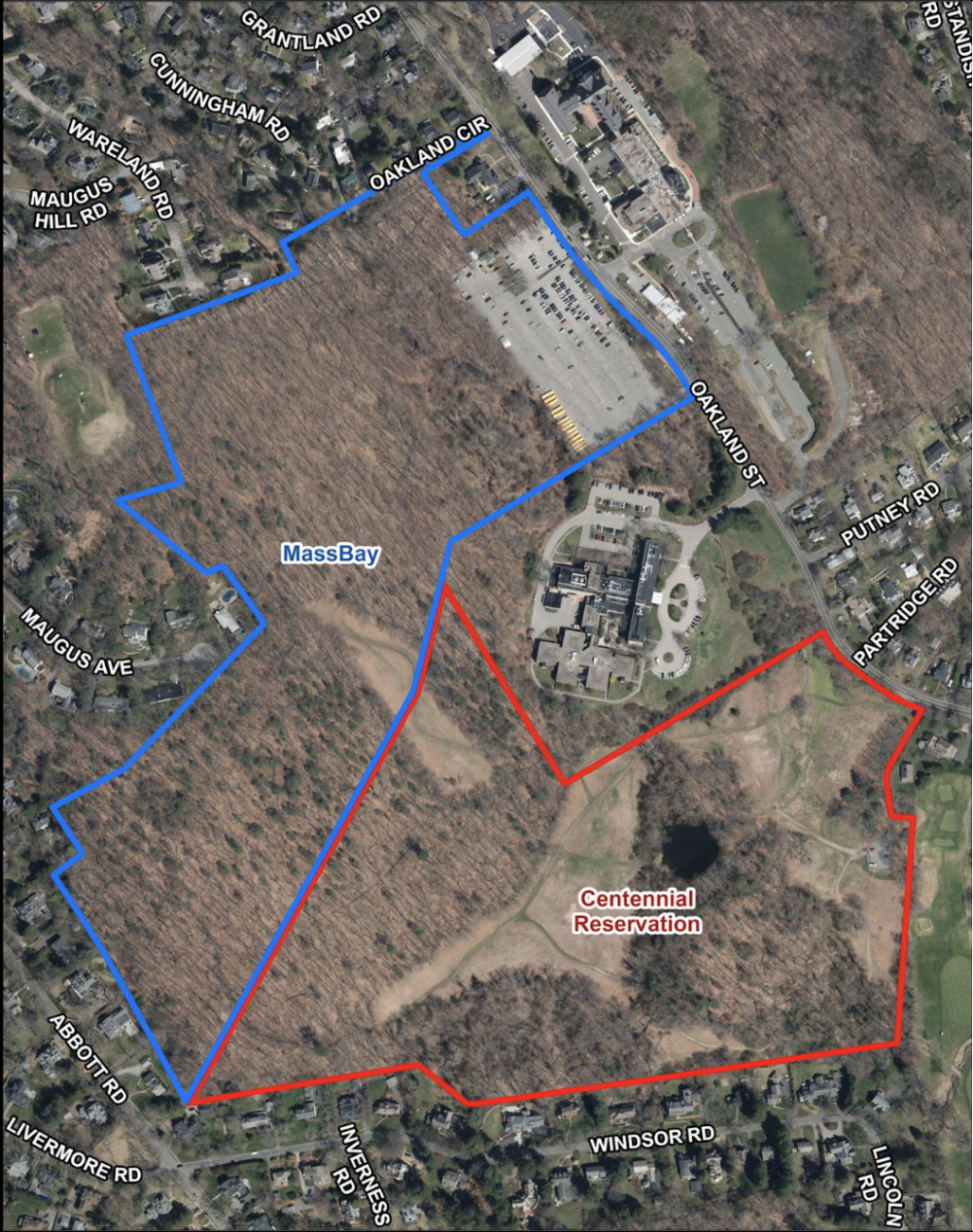
The law allows for 180 housing units. More specifically, it compels the town to allow no fewer than 4 units per acre.
This applies to the entire 45-acre state-owned parcel on Oakland St. and creates an opportunity for 180 much-needed homes.
- 4 units per acre multiplied by 45 acres = 180 homes
- 5-acre parking lot plus 40-acre forest = 45-acre parcel
If development is limited to the 5-acre parking lot, why does the state need to designate all 45 acres as surplus
The Affordable Homes Act does not require housing to be evenly distributed across every acre of a surplus land parcel. To make the project practical for development and meet the town’s affordable housing mandate, there needs to be sufficient density to pencil out.
That fact, coupled with Gov. Maura Healey making it clear that addressing the state’s housing shortage is a top priority, has led to them pursuing the maximum number of homes…180.
Why does the state prioritize maximizing the number of homes?
Gov. Maura Healey has made increasing housing supply and affordability a top priority. The administration has identified sites across the state for this program. This effort is not just targeted at Wellesley.
Like many Massachusetts communities, Wellesley has a diverse array of unmet housing needs. According to the town’s Strategic Housing Plan, without new housing options, it has become increasingly difficult for young families, early-career workers, and downsizing seniors to move into or stay in the community.
Also, Wellesley’s workforce is increasingly unable to afford to live within or even near the town. They are being forced farther and farther out, only adding to traffic congestion as commutes lengthen.
Adding more variety to Wellesley’s predominantly single-family housing stock gives all these important community members options if they wish to stay or live in town.
Finally, the number of homes is closely tied to the sale value, and MassBay needs a high sale value to reinvest in its campus facilities.
Why does the Charles River Chamber support maximizing the number of homes?
Our chamber and other business groups consistently rank housing as the No. 1 threat to the state’s economic vitality and competitiveness.
Employers tell us the lack of modestly priced homes in Greater Boston’s suburbs makes recruiting and retaining talent a grind. Brokers say affordability limits their ability to lure new companies here.
The result? We’re losing workers and businesses to North Carolina, Texas, Florida, and New Hampshire, while the same fight playing out in Wellesley repeats itself across the Commonwealth.
That is why we see 180 homes not as a burden but as a benefit to town’s economic vitality.
How large would a 180-unit development be?
This development will be a similar size to the Wesley Green condominium at 65 Grove Street.
Those 149 units overlook the Fuller Brook Path and adjacent woods. It serves as an example of how this level of density can be integrated into a neighborhood.
How would the project fit with the neighborhood character?
It's true that many in town are worried that this development will harm the town’s character. However, we believe the opposite is true.
- Not creating opportunities for young families to live here harms the town’s character.
- Not allowing people who work here to live here harms the town’s character.
- Losing cherished local businesses due to workforce shortages harms the town’s character.
- Pricing out all but the most affluent harms Wellesley’s character.
Wellesley’s current and future economic vitality depends on creating new and varied housing options for its business owners, workforce, and customers, and these 180 homes would do just that.
When and how will this property get redeployed?
Eventually, the state will issue a Request for Proposals (RFP) for the site’s redevelopment and select a developer to purchase and build out the project.
That RFP — and the town’s subsequent review process — represents the most meaningful opportunity for local officials to influence the size, character and mitigation measures tied to the development.
Rather than working cooperatively to shape the RFP— whether by advocating for a higher percentage of affordable housing, stronger traffic mitigation or thoughtful design standards — the Select Board postponed the visioning session intended to inform the RFP and has since retained counsel to explore potential litigation.
Eventually, this RFP will be issued, and it's in the best interest of the town to work with the state to make sure it is as specific and beneficial as possible.
In the Boston Globe article, the state’s housing secretary stressed that the state will not budge on the number of units on the site. And they plan to move soon.
“This is not an open-ended process,” he said. “This is a process that at some point needs to stop, and then we need to move forward.”